

Home
back to top
back to bottom
Custom Search

.:: Table Of Content ::.

Competition of Beautiful cars from the 2011 Frankfurt Motor Show

 The cars that caught my eye at the 2011 Frankfurt Motor Show.

Jaguar C-X16 Concept

Jaguar’s new C-X16 concept car, wow.  Looks a little E-type shape don’t you think.  Meant to go on sale in late 2012 at £55,000.  It will have a 94bhp electric motor in the drivetrain and Jaguar claims this concept car can travel at up to 50mph on EV mode. It’s quick, 0-62mph takes 4.4sec, combined economy is quoted at 41mpg.  Can’t wait to see one in the flesh.  Want more on this car,
 

Lamborghini Gallardo LP570-4 Super Trofeo Stradale


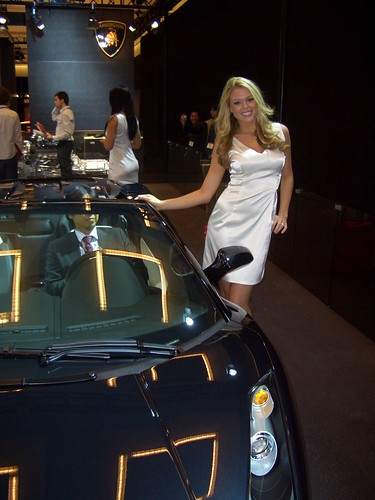
This monstrous special edition, the Super Trofeo Stradale. Basically a street legal version of the Gallardo Super Trofeo one-make series racer.  This car  combine’s 570hp with AWD, a sub-3,000 lb. curb weight and a track-ready rear spoiler to yield face-stretching performance. Only 150 will be made, so be quick.  Want more on this car,


 Aston Martin V12 Zagato

150 will be built.  It will be priced at approx. £300,000 (way too much in my opinion).  Want more on this car, read The Automotor Blog review.

Porsche 911

The most successful sportscar bar none is back.  It evolve’s again, codenamed 991, both the Carrera and Carrera S have more powerful, but less thirsty flat sixes mounted aft of the rear wheels, as well as a choice of 7-speed PDK or 7-speed manual transmissions.  Want more on this car,

Ferrari 458 Italia Spider

The Ferrari 458 Italia is beautiful, period.  This is especially true when you raise or lower the stylish, smoothly integrated folding hardtop, a production mid-engine Ferrari first.  Want more on this car,

Porsche 911 by TechArt GTStreet RS

The Porsche 911 GT2 RS is already an awesome bit of kit, but the serial Porsche tweakers at TechArt felt there was room for even more madness. The GTStreet RS is proof their assumption was correct. The aggressive body kit, stylish wheels and matte blue and black paint are dramatic departures from the stock GT2 RS, but the extra 90 horsepower (for a total of 710hp). That helps it hit 62 mph from a dead stop in 3.3 seconds and max out at 218 mph. Wow.  Want more on this car,

Mercedes-Benz  F-125! Concept

As the name implies, this car is a celebration of the company’s 125th anniversary, as well as a hint at what the boffins in Stuttgart are working on for the years to come, such as stereoscopic 3D instrument readouts and lithium-sulphur batteries.  This car claims to combine two fuel technologies in one vehicle,  Mercedes-Benz has packaged both a fuel cell and a plug-in hybrid system into the F-125! Concept.  Will it ever get built, only time will tell, but it looks and sounds a good concept.  Want more on this car, read what Car Magazine had to say about the car.

Bentley Continental GTC

With the new Bentley Continental GT on its way to production soon, it should surprise exactly no one that a new Continental GTC is hot on its heels, er, tailpipes. It features the same evolutionary styling and more powerful flex-fuel twin-turbo W12 as the hardtop, but with the added bonus of a folding fabric roof. Even though this model will inevitably be co-opted by the famous-for-being-famous crowd, we’ll still be proud to pine for it.  Want more on this car,

So there you have it, my run down of the best and most beautiful cars at this years Frankfurt Motor Show.


Beautiful Concept Electric Red Car Design


You will see many others cars concept some of concepts are so boring but i think you should like this car concept I really like this concept because the car color is so beautiful and its my favorite. This concept car is stand on Paris street, you could see a new concept car Renault elektrokupe Renault DeZir the first project developed under the leadership of Lawrence van den Akera (Laurens van der Acker), the new chief designer Renault. Renault DeZir is a double sleeper length of 4,225 mm and a width of 1968 mm, equipped with an electric power of 100 kW (150 hp) with torque of 226 Nm. New sport electric trolley can accelerate from 0 to 100 km / h in 5 seconds or from 0 to 50 km / h in just 2 seconds. In interior design avtokontsepta Renault DeZir included: refined form of the front seats, front panel, as if floating in the air, high contrast glossy finish front driver’s door, steering column and center console, spectacular red light interior. Totally so this concept is awesome and i like that company make it real.


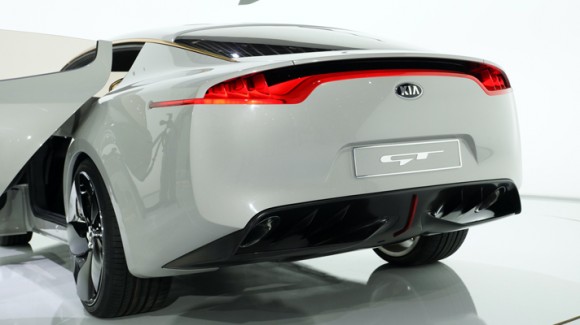
Kia GT Concept Car, Will Be Produced in 2013


(Kia GT Concept Car, Will Be Produced in 2013) – For the production that will begin in 2013, Kia plans to market this car for the European market first, because demand in Europe is very high. After that followed marketed to the automotive markets of Asia and America.


This car will be powered 3.3-liter V6 engine that produces 390 hp.


Shute joins Caterham's technology business

Lotus Elise engineer Tony Shute heads road car operations for Caterham's ambitious new technology division.


Caterham Cars has released details of a standalone engineering business, Caterham Technology and Innovation Limited (CTI), and the appointment of ex-Lotus engineer Tony Shute as head of road cars.

The company will be responsible for the development of a completely new line of "accessible and affordable" lightweight sportscars, and will undertake advanced projects for external companies in the automotive and aerospace sectors.

The new business will focus on unique vehicle architectures, high performance engines, advanced materials and manufacturing technologies in association with the Team Lotus Formula One team and Caterham Team AirAsia GP2 race team.

"When the opportunity to be involved with creating the next iconic Caterham arose, I couldn't turn it down," says Shute (left) who was responsible for developing the original Lotus Elise. "The core principles and ambitions of CTI have enabled us to attract some of the brightest and most respected talents in their fields."

"The new shareholders are committed to investing in an exciting range of global products over the next 10 years," says Mark Edwards (right) CTI's Chief Executive. "Tony Fernandes has been very clear from the start that Caterham needed a sustainable research and development business model in order to meet the plans the management have for the road car business. By establishing unique operating principles for CTI, we have managed to attract a world-class team of niche vehicle engineers eager to build on the ethos of Caterham and the DNA of the Seven."

Speaking of Caterham Technology and Innovation, Caterham Cars' Chief Executive, Ansar Ali, says: "Creating a new product range that has the same reputation and appeal as the Seven, which delivers on the promise of accessibility and affordability, is the Holy Grail in this business. To meet the challenge, we knew we needed to invest in a new operation that would have the scope, experience and vision to deliver. I feel very confident that our customers will be very pleased with the products I have challenged CTI to deliver, in addition to supporting the Seven and I look forward to revealing our plans in more detail soon."

Caterham Technology and Innovation is based in Norfolk near the Group's motorsport operations.


New Beautiful Design Jaguar C-X16: first details of sports car concept

 Jaguar has released details of its C-X16 concept, which previews a new production sports car.

The C-X16's technical highlight is its petrol-electric hybrid powertrain. The engine is a supercharged V6 producing 380PS (280kW) and 332lbft (450 Nm). The engine is mated to an eight-speed automatic transmission which incorporates an electric drive motor drawing power from a 1.6kWh battery pack mounted behind the seats. Charged through a brake energy regeneration system, the batteries allow the motor to provide an additional 95PS (70kW) and 173lbft (235Nm) when activated by a 'push to pass' button on the steering wheel. The C-X16 is also able to travel at speeds of up to 50 mph under electric power alone and records CO2 emissions of 165 g/km in standard tests.

The C-X16 has a lightweight aluminium structure, which Jaguar already uses in its XJ and XK production cars.


Jaguar claims 0-62 mph acceleration in 4.4 seconds, a top speed of 186 mph and acceleration from 50-75 mph of 2.1 seconds.

At 4445 mm in length, the C-X16 is the smallest Jaguar since the XK120.

Adrian Hallmark, Global Brand Director, Jaguar Cars: "The C-X16 embodies the established Jaguar strengths of sensual design, animal-like agility and inspirational performance and combines these with attributes that set us on a course to create sustainable sports cars of the future."

Ian Callum, Director of Design, Jaguar Cars: "Jaguars have always been dramatically different. With the C-X16 we have moved the current award-winning design language on to the next generation, creating a car that is the very essence of future Jaguar performance."


The Ferrari F25 Superfast is a futuristic sportscar for the year 2025 inspired by the Futurism artistic movement.

The Ferrari F25 Superfast is a futuristic sportscar for the year 2025 inspired by the Futurism artistic movement. It was designed by IAAD graduates Diego Dellavalle and Riccardo Bordin.

Developed for the Ferrari World Design Contest 2011, the F25 Superfast takes inspiration from Futurism, an artistic and social movement started in Italy at the beginning of the 20th century.

Futurist works emphasize themes associated with concepts of the future, including speed and technology, as well as objects such as cars and airplanes.
Also, they feature a constant research of dynamism: the subject is never static. The F25 Superfast aimes at expressing a sensation of speed even when stationary.
 

The design is characterized by distinctive shapes defined by tight lines that underline the sense and tension of motion.

“The aim of our project was to set up a car developed for maximum performance, with the capability of maintaining its internal stability (performance, aerodynamics, cooling components) regardless of the external conditions, through a self-regulating processes.”

“This happens in living organisms by means of homeostasis, that is the continuous series of actions/reactions, which helps to maintain stability”


 “In this project we developed these concepts by integrating innovative technologies, which allow to revolutionize the style and that could provide huge benefits in terms of aerodynamics, resulting in unique shapes and hallmarks.

On this regard, the innovative materials used on the concept include:

    Automend: a self-repairing plastic, used on specific areas of the body, more subject to shocks.
    BetaGel: a material capable of dissipating shock energy, used for the bumpers and seats.
    Aerogel: a semitransparent substance derived from a gel in which the liquid component has been replaced with a gas used as a thermal insulator.


The F25 Superfast is powered by an electric powertrain equipped with four in-wheel motors, fed by a battery which is charged through a hydrogen turbine.


Beautiful Mercedes-Benz Advanced Studio in Como, Italy, the facility started in 1998 and specialized in interior design.

The images were published at the end of 2010 for the 125th Anniversary of the brand, while the document reported below was released for the presentation of the new Mercedes-Benz B-Class.

Image galleries of the other studios – Carlsbad, Tokyo and Sindelfingen – will follow in the upcoming days.

The Advanced Design Studio in Como is led by Michele Jauch Paganetti and is located at Villa Salazar, close to the banks of Lake Como.

It is part of a group of five Advanced Design Studios around the world, which develop solutions for a long-term future (50 years from now) and employ a total of 60 designers – who join the around 440 designers working on series models.


From the official Press Release:
It has always been a prime location: it was at Villa Salazar, situated close to the banks of Lake Como, that Italian fashion designer Gianni Versace produced neckties and cravats before Mercedes-Benz opened its Advanced Design Studio there in February 1998.

With its contemporary painted ceilings, long suites of rooms and contrasting floors of terracotta and wood, the villa, which was built in 1750, is extraordinarily inspirational to the entire staff of around 20 designers.

The same can be said of the region itself: the famous triangular region defined by the cities of Como, Milan and Turin is home to the furniture and fashion industries.


A high value is placed on traditional craftsmanship there – making it an ideal setting for the Advanced Design Studio.

These diverse inspirations are reflected in the interior design concepts for vehicles – which is what the Advanced Design Studio in Como specializes in.

The designers can give free rein to their ideas without having to immediately consider series production, even though that is the actual objective of their ideas and ruminations. An example is the free-floating, streamlined screen in the new Mercedes B-Class.

And it is also a new approach developed in Como by Mercedes-Benz which is why this model series has achieved a new dimension of high quality in the compact class.

The designers use an “appreciation model” to bring their ideas to life initially and then look for a way to include these ideas in series production. This produces a more harmonious and higher-quality result than if the interior had been retroactively enhanced.


The tasks of the creative forces in Como are plentiful. They conduct general research, create drafts and build models – and are always looking out towards the horizon so that they can develop the car interiors of the future. A certain lack of respect for old traditions is desired in order to find new approaches.

“We don’t follow any fads,” said Professor h.c. Gorden Wagener, Chief Designer at Mercedes-Benz, “instead we try to sniff out long-term trends that will enhance our brand’s value over decades. Ideas that meet the highest demands in technology, performance, comfort and safety”.

That is why a designer needs to “live in the future” and think at least two to three vehicle generations in advance.

One of the first visible and tangible results of the Advanced Design Studio in Como was the interior of the Mercedes-Benz F 400 Carving research vehicle (Tokyo 2001).

It was followed in 2002 by the Vision GST – a predecessor of the Mercedes-Benz R-Class – in Detroit, and in 2003 by the F 500 Mind research vehicle in Tokyo. In 2005 the Mercedes-Benz bionic car was introduced to the public in Washington, D.C., and the F 600 HYGENIUS appeared in Tokyo.

For the Mercedes-Benz F 700 research vehicle introduced in 2007 the interior specialists in Como relied heavily on cork and Alcantara.

With its sister studios in Carlsbad (California), Tokyo, Beijing and Sindelfingen, the Advanced Design Studio in Como not only regularly trades ideas but creative staff as well.


Mercedes-Benz Design Center in Sindelfingen, Germany, located in a building designed by Renzo Piano Building Workshop.

The Sindelfingen-based Mercedes-Benz Design Center was designed by Christoph Kohlbecker (Gaggenau) and Renzo Piano Building Workshop and was completed in 1998.

The 30,000 square meters facility employs more than 400 people from over 20 countries.

The Design Center coordinates and directs the activities of the different Advanced Design Studios in Carlsbad, Tokyo, Como, and develops the design of the Group’s production models.


The shape of the building resembles an open hand, in which each element has a different function: design, CAD drafting, model making, prototyping and presentation of full size car models.

The doubly curved roof is made of segments consisting of patches cut from a toroidal surface.

In a special area, a controllable, semi-transparent light wing ceiling allows the presentation of new vehicles under simulated daylight conditions.

Check the full gallery here or visit the other image galleris from the Mercedes-Benz Advanced Design Studios in Como (Italy), Tokyo and Carlsbad.


CPP will produce a modern version of the Jensen Interceptor, a Beautiful concept in 2012 and to go on sale in 2014.


British automotive group CPP has been commissioned to finalize the development of the all-new Jensen Interceptor by HSCS – Healey Sports Cars Switzerland Ltd), owner of the brand’s assets and intellectual property.

The design of the sportscar was created by a team of Coventry-based design consultants employed by HSCS, while the development will be completed at CPP’s new production facility in Coventry.

The new Jensen Interceptor will be based on an all-new aluminum chassis and handcrafted aluminum body.

 It will debut next year as a concept and is expected to hit the market in 2014.

The car echoes the four-seat grand tourer layout of the original model, which was built between 1966 and 1976 and featured a V8 powertrain and technologies quite advanced for the time, including all-wheel drive, ABS and traction control.

Brendan O’Toole, founder and co-owner of CPP, commented: “The Jensen design team has respected and honored the great heritage and attributes of the original Interceptor, while injecting a contemporary edge and advanced technologies that will ensure it appeals to the passionate, discerning motoring enthusiast of today.”


New Concept Design Jensen Interceptor due by 2014

Jensen Interceptor due by 2014

The original Jensen Interceptor was a uniquely styled four-seat grand tourer which was built between 1966 and 1976. The Interceptor was Jensen’s most successful model, and a total of 6,408 were produced. Today Interceptor’s are a rare sight – well they always were – but their cult status has only improved with age. Now CPP, a British specialist automotive group, has been appointed to resurrect the Interceptor by Jensen’s current owners, Healey Sports Cars Switzerland Ltd (HSCS).

CPP acquired the highly respected 4×4 marque Bowler earlier this year, and in the near future they’ll take control of the Dutch supercar manufacturer Spyker. So they’ve got plenty of well-seasoned automotive engineers to call on for help in bringing back a legend.

Thankfully, the new Jensen Interceptor is going to be an all new car from the ground up. It’s not going to be composed of some kit-car like steel chassis covered with wavy fiberglass panels, nor will it be based on it’s predecessors aged platform. It will be based on an all-new aluminium chassis, and the bodywork will be made of the same stuff.

CPP are tentatively scheduling in a public unveiling of the new Interceptor for late 2012, with deliveries to customers beginning in 2014.  Annual production numbers and pricing are yet to be confirmed, but will be fixed to ensure ultra-exclusivity.

Brendan O’Toole, founder and co-owner of CPP, said of the car’s return: “I started my career by restoring bodies and components for classic British sports cars, so for CPP to take the lead role in reviving this iconic brand is very exciting for the business, and for me personally.  The Jensen design team has respected and honoured the great heritage and attributes of the original Interceptor, while injecting a contemporary edge and advanced technologies that will ensure it appeals to the passionate, discerning motoring enthusiast of today. This work is at an advanced stage, and married to CPP’s expert coachbuilding, craftsmanship and engineering skills, the new Interceptor will be an exceptional example of British automotive excellence.”

Liam Cardiff, director of Healey Sports Cars Switzerland, added: “CPP is the perfect partner to revive the iconic Jensen Interceptor.  With the Jensen design team integrated into an organisation with much greater resources and broader expertise, our dream of seeing the Jensen and Interceptor badges once again adorning the bonnets of beautiful, modern, British-built GT cars has come closer to reality.”

At the moment there aren’t any details on the car’s drivetrain, equipment or engineering. The only clues as to the new Interceptor’s styling come in the form of these two sketches, but seeing as the two images are of two slightly different cars, it’s anyone’s guess at the moment what the final car will look like.


Related Posts Plugin for WordPress, Blogger...